Back-to-School 2026: A Parent's Budget — Where You Can Save
Stationery: 9 000 сум — compare prices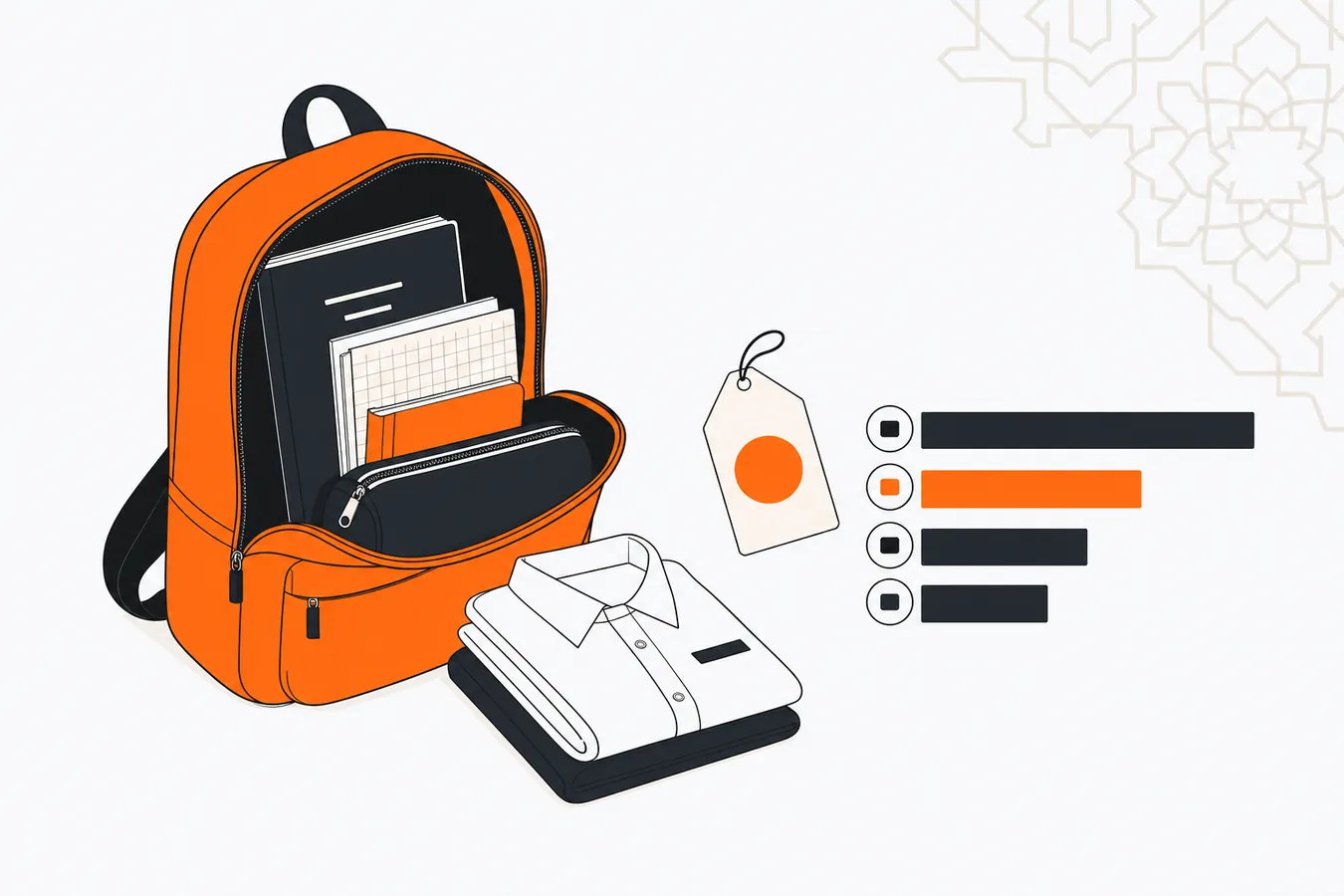
Products and prices for this topic
View the full category →


Last August my wife put the list on the kitchen table and started adding up the first column with a pencil. Uniform — two sets. Shoes — one pair. Backpack — a new one; the strap on the old one had snapped. Notebooks, pens, a water bottle, gym kit. For our son, who was starting first grade. At the bottom of the column the figure came out to: 2,180,000 UZS. I added it up twice — both times I got the same number. I remembered that a colleague in Fergana had closed out exactly the same list for 1,350,000. Depending on the region, the store, and the time of purchase, one family's budget can differ from another's by almost two times.
This article is an attempt to run that same calculation in advance for 2026. The sources, the numbers, where you can trim and where you can't.
The numbers from the sources
In August 2025 the publication Zamin.uz broke down the back-to-school season and recorded that Uzbek families spend 1.1–2.3 million UZS per child. That range is not random — the lower bound corresponds to families who prepared in advance, the upper bound to those who buy at the end of August.
The regional spread is also noticeable. In Tashkent the same basket is usually +20% above the regional average — higher rent, higher retail markup, and city stores know that demand in August is inelastic. Fergana, Andijan, Namangan are closer to the lower bound. Bukhara and Samarkand are in the middle. This means one family's budget can't be transferred to another: in Tashkent the average comes to 1.9 million, in Fergana — 1.4 million, for the same child and the same grade.
5 categories — where the budget goes
Uniform. The average price in August 2025 for two sets — 450,000–650,000 UZS. In primary school the category is strict: white shirt, black trousers or skirt, vest. Where you can trim — buy the shirt on Olcha or at the bazaar in July, it comes out almost twice as cheap. Where you can't trim — bad fabric tears after three washes, and the final price doubles.
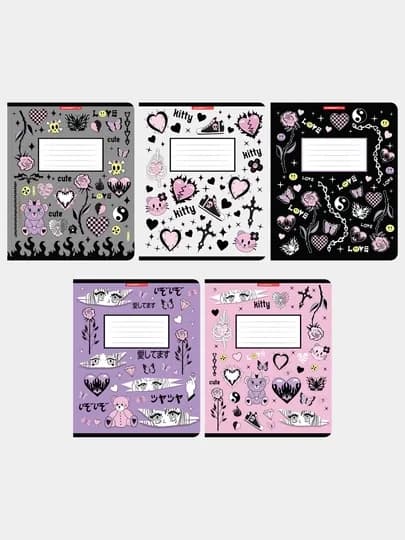
Stationery. Notebooks, pens, pencils, a ruler, paints, glue, a folder. A set — 180,000–280,000 UZS. Here the compression is nominal: swapping a Korean notebook for a Uzbek-made one saves 40,000–60,000. But the Uzbek one isn't in every store, and the teacher sometimes requires a specific type of notebook — read the list in advance.
Shoes. School shoes — 350,000–550,000 UZS. This is the category where saving is hard. Bad footwear in first grade breaks the mechanics of the foot — every orthopedist says this with one voice. The saving here isn't in the budget but in the timing: buy in July, not August, and the price is 15% lower.
Backpack and accessories. A good bag — 300,000–500,000 UZS, a water bottle, lunchbox, pencil case — another 100,000–150,000. The bag is bought for 4 years, the saving is contextual: a cheap one will tear in its sixth month, and you'll pay again. The recommendation — buy once for 400,000–450,000, but a quality one.
Electronics (if needed). In grades 1–4 — usually not needed. From grade 5 a tablet or laptop appears for homework. A budget tablet — 1.8–2.5 million UZS, an entry-level laptop — 4.5–6 million UZS. Don't buy in August — that's the peak for both electronics and school supplies at the same time.
If you add it up: uniform + stationery + shoes + backpack without electronics gives 1.3–2 million UZS. That fits neatly into Zamin's range.
What definitely gets more expensive in August
In our observations across 2025, prices in August rose compared to June–July like this:
- Uniform — +35%. The hardest hit. A set that cost 480,000 in July comes out at 650,000 by the end of August. The reason is simple: the payday cycle falls in mid-August, and the stores know it.
- Backpack — +20%. Between early July and late August.
- School shoes — +15%. Leftover sizes get sold off, popular sizes run out in August, and you're forced to take whatever is left at the new price.
- Notebooks and stationery — +10–12%. Weaker, but noticeable.
There's one recommendation: buy in the second half of July. On an average budget of 1.7 million that gives a saving of 250,000–350,000.
What it makes no sense to save on
Two things where the cost of saving is greater than the saving itself:
The quality of school shoes. Bad footwear in first grade breaks the mechanics of the foot. The child spends 6 hours a day in them. You saved 100,000 — and a year later you paid the orthopedist 800,000.
Screen quality, if you're buying a laptop. From grade 5 a child spends 2–3 hours a day at a screen. The cheapest laptop with a TN panel strains the eyes over 5 years. IPS and an anti-glare coating are the minimum requirement in this category. In price that's a difference of 500,000–700,000, but saving on health makes no sense.
How to make a plan
Four steps, each one shrinks the next.
1. Take inventory. At the end of June, go into your child's room and write down everything you already have. The old uniform — still good, don't throw it out. The old bag — check the straps. Notebooks — count what's left on the back cover. This list usually removes 15–20% of the preparation budget.
2. The list. Get the official list from the teacher. In primary school they often require specific notebooks and specific stationery — if you buy something "better," you'll have to buy again.
3. A price ceiling. Set a maximum price for each category. Uniform — 600,000. Shoes — 500,000. Bag — 450,000. This is your personal "above this — I don't buy." Without a ceiling the budget drifts: every purchase adds "just 50,000 more," and altogether it comes to 400,000.
4. Track it on BirBozor. From the first week of July, track each item in parallel across 5 stores. If a store shows a "sale" — check it against the 30-day window (since October 21, 2025 the "old price" is required by law to equal the minimum over the past 30 days). On the uniform basket in July the average saving is 80,000–120,000, on the backpack — 40,000–60,000.
The child's budget
The column that's often forgotten. If you give your child 50,000 UZS of pocket money a week, over the school year (about 36 weeks) that's 1.8 million UZS. That's half the preparation budget. And this column doesn't make it onto the first page of the budget, because it's perceived as a "running expense" rather than "preparation."
A tip: pocket money is a separate envelope, a separate plan. 30,000 a week is enough for most families (lunch + 1–2 small purchases). 50,000 — lunch plus their own interests. Above that — judge by the level of the school and the neighborhood.
The second forgotten column is transport. If the child travels to school by bus or taxi, that's 8,000–15,000 a day, 200,000–350,000 a month, 1.8–3 million a year. Most families record this as a "general family expense" and don't include it in the school budget, but this line pulls money no less than any other category. If you can, arrange a shared ride with the neighbors — the price drops by half.
The third nuance is extracurriculars. Sports, languages, music — all of this comes after "preparation" and requires a separate budget. In Tashkent the average sports section is 250,000–400,000 a month, a language club — 350,000–600,000, a music teacher — 400,000–800,000. A family that signed up in August often finds itself in a "we're short on money" situation in September–October. The right approach is to choose the extracurriculars in June–July and build the payment into the yearly plan, not into the moment the season starts.
What to do right now
At the end of June — inventory and a list. In July — uniform, shoes, bag, before the August peak. For August you leave only the stationery the teacher has approved, and the things you definitely can't buy without them.
In the Telegram channel @birbozor_uz, starting in early July, we'll be posting weekly snapshots of the school category. The beta version of the app with automatic 30-day checking — in 8 weeks. Subscribe — we'll help cut your child's back-to-school budget by 30%.
Save a product in farq.uz — we show the 90-day low next to the current price tag.
Subscribe @farq_uz